
How to operate canal locks
Narrowboat novices – don’t be intimidated by locks. Although they can seem daunting at first, they often become the highlight of a narrowboat holiday. Just remember to take things slowly and carefully. We’ve put together a quick and easy guide on how to operate canal locks when on your Union Wharf Narrowboats holiday.
What is a canal lock, and how does it work?
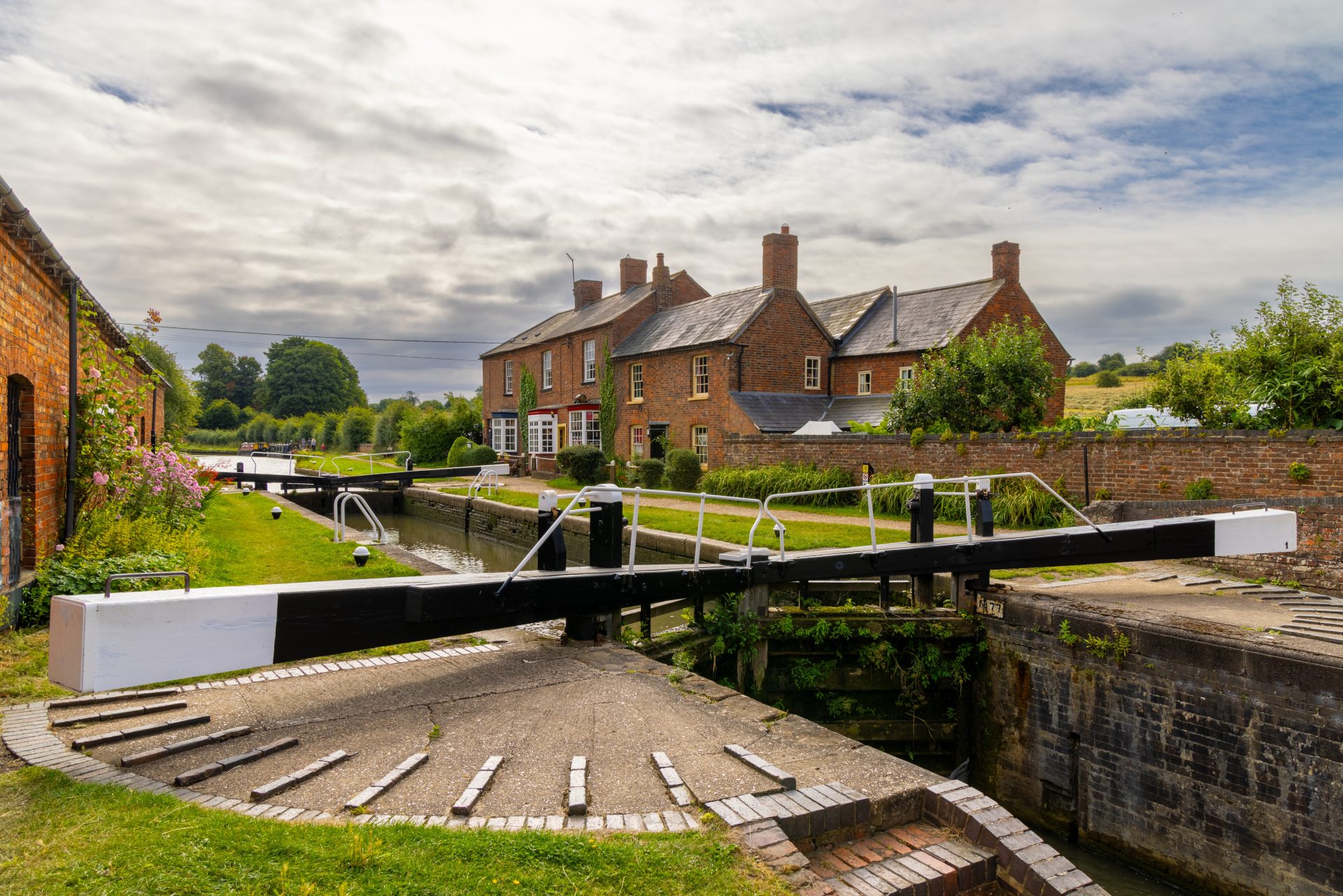
A canal lock is a stretch of canal that is blocked off at each end by gates, which can be opened or closed to allow water to fill or drain from the chamber between the gates. By changing the water level, narrowboats can travel up or down hills.
Locks rely on water pressure and your muscle power to work. Once the gates are closed, the relevant gate paddle is raised or lowered to allow water in or out of the chamber, bringing your boat to the same level as the water you wish to proceed on.
How to ascend in a canal lock
- Send one of your crew to check that the lock is not already in use, and whether it is full of water or empty. If in use, stay clear so that the other boater can complete their journey unimpeded.
- If the lock is empty of water, push against the balance beams to open the gates. Take your boat in slowly and carefully, remaining in the middle of the chamber.
- If the lock is full of water, moor up while your crew empty the lock. They do this by raising the paddles until the lock drains of water. When empty, take your boat in slowly and remain in the middle of the chamber.
- When the gates are closed behind you, your crew will move to the other end of the lock and wind up the ‘ground’ paddles, which opens them and fills the lock. This must be done slowly to avoid creating a tidal wave in the chamber and risk damaging your boat. Keep the boat central with small bursts of throttle.
- When the lock is full, open the top gate and cruise out, while your crew shut the top paddles. Moor up while they shut the gate behind you, and then once all are aboard, you’re ready to head off up the canal.
How to descend in a canal lock
- Send one of your crew to check that the lock is not already in use, and whether it is full of water or empty. If in use, stay clear so that the other boater can complete their journey through unimpeded.
- If the lock is full of water, push against the balance beams to open the gates. Take your boat in slowly and carefully, remaining in the middle of the chamber.
- If the lock is empty of water, fill it by winding the paddles nearest to your boat. When full, open the gate and cruise into the chamber, closing it behind you and lowering the paddles.
- Your crew will empty the paddles in front of you to empty the lock, while you ensure that your narrowboat does not drift backwards into the cill on the top gates (a cill is a protruding ledge which can wedge, trap or tilt your boat if caught on it).
- When the water levels are equal, cruise out and moor up while your crew closes the gates, lowers the paddles, and joins you on board for the remainder of your journey.
Safety tips when operating a canal lock
- Take your time, enter and exit slowly, and stay alert for any problems. Good communication between the driver and the crew operating the gates is important.
- Never leave your narrowboat unattended while in a lock. Ensure the person or persons left aboard are competent.
- Keep your boat well away from the gates and cills.
- Do not allow small children to touch the mechanisms around the locks and make sure they are supervised at all times. Keep them away from the lock edge.
- Watch out for slippery surfaces and unprotected drops when you’re pushing the gates open.